
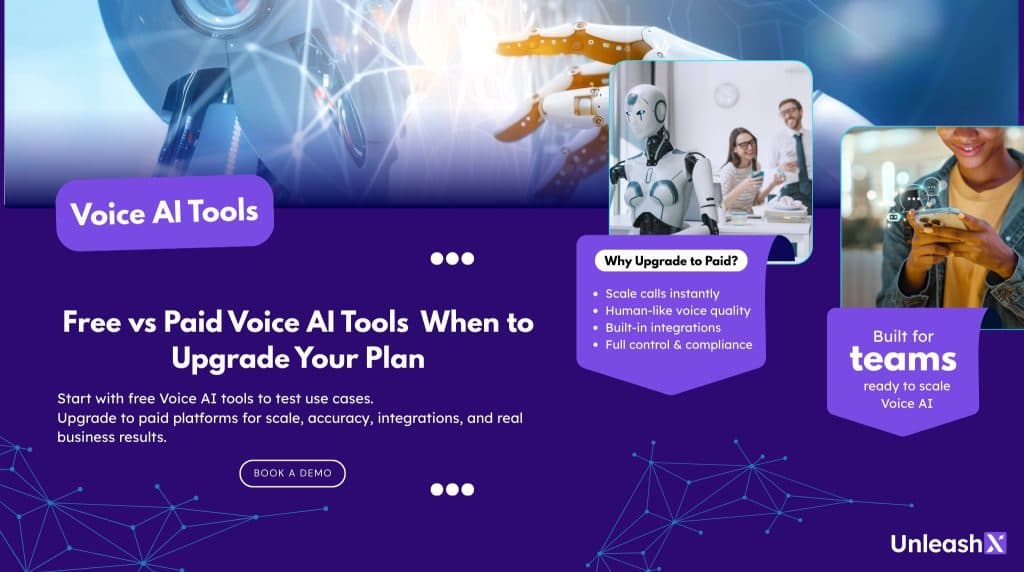
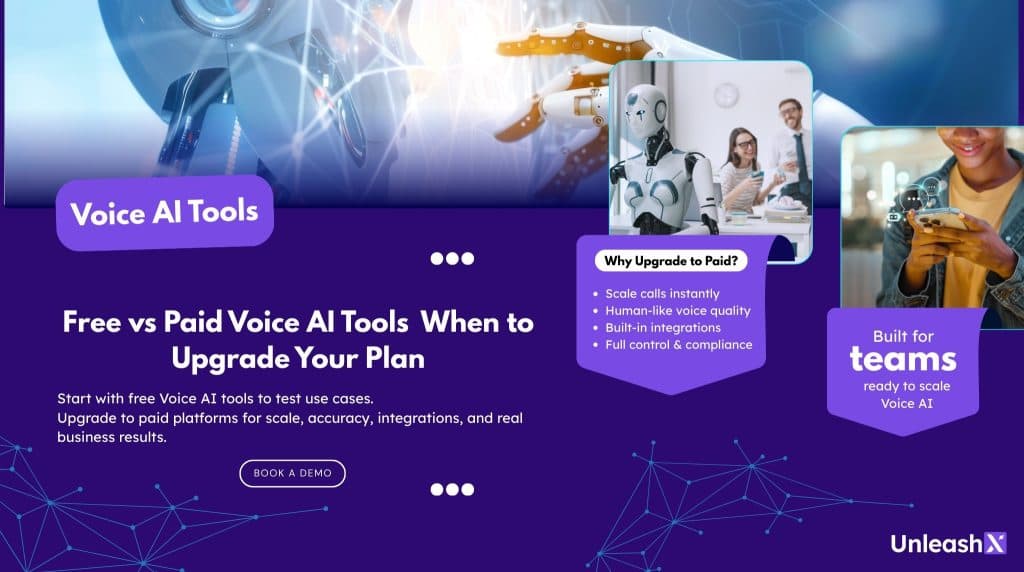
Artificial intelligence has completely changed how businesses communicate. What used to require a full customer service team can now run on software. But if you’re exploring this technology, you’re probably asking yourself: should I use a free tool or pay for something better?
The options are overwhelming. Some tools offer basic transcription. Others claim they’ll transform your entire business. For small businesses and freelancers, free versions seem like the smart choice. But as you grow, those free plans start showing their limits.
Knowing when to upgrade can save you from headaches down the road. This guide shows you what free and paid tools actually offer, and helps you figure out when it’s time to invest.
Why Free Voice AI Tools Are Tempting
Let’s be honest-free is appealing. If you’re just starting out or don’t have much call volume, a free tool makes perfect sense. You can test the technology without risking your budget.
What Free Plans Usually Include
Most free plans give you just enough to see what the technology can do, but not enough to really rely on it:
Limited Transcription: You might get 30-60 minutes of speech-to-text per month. Once that’s gone, you’re stuck waiting until next month.
Basic Voices: The text-to-speech voices sound robotic and generic. They get the job done, but nobody’s mistaking them for a real person.
One User Only: Free plans usually lock you to a single login. If you have a team, you’re all sharing one account.
No Integrations: Forget connecting to your CRM, email system, or helpdesk software. Free tools stand alone.
Who Should Stay on Free Plans
If you’re a solo business owner transcribing a few notes each week, free works fine. The limitations won’t slow you down because you’re not pushing the system hard.
Developers testing out an idea before building something bigger also benefit from free tiers. You can experiment without spending money on something that might not pan out.
Where Free Plans Fall Short
“Free” sounds great until you realize what it’s costing you in other ways-mainly your time and your reputation.
The problems start when you actually depend on these tools. You run out of minutes mid-month and have to pause your work. Your automated customer service sounds so robotic that people hang up. You can’t track conversations because there’s no way to export data.
Free text-to-speech voices lack the natural flow that makes interactions feel comfortable. If customers are hearing choppy, emotionless responses, they’re not going to trust your business.
And if you need voice AI tools for end-to-end call automation-where the system handles everything from greeting to resolution-free plans simply can’t do it. That level of sophistication requires serious computing power, which providers only offer to paying customers.
What You Get When You Upgrade
Paying for voice AI isn’t just about getting more minutes. It’s about unlocking features that actually move your business forward.
The Real Benefits of Paid Plans
Better Voice Quality: Paid plans give you access to neural voices that sound completely human. They pause naturally, add emotion, and adjust their tone based on context.
Customization: You can adjust voices to match your brand, or even clone a specific voice to maintain consistency across all customer touchpoints.
No Limits: High or unlimited usage caps mean you never have to worry about running out during your busiest periods.
Security: Enterprise-level encryption and compliance (HIPAA, SOC2) protect sensitive customer data. Free plans rarely offer this.
Integration Changes Everything
The biggest difference is how paid tools connect to everything else you use. Premium plans offer API access and direct integrations with platforms like Salesforce, Slack, and Zendesk.
This means when a customer calls, the AI doesn’t just answer-it can update your database, send alerts to your team, and schedule follow-ups automatically.
For businesses serious about efficiency, voice AI tools for end-to-end call automation handle entire conversations without human help. The AI greets customers, solves their problems, and wraps up the call. This level of automation only exists in paid subscriptions.
5 Clear Signs You Need to Upgrade
Not sure if you’ve outgrown the free tier? Here are five situations that scream “it’s time to pay.”
1. You Keep Hitting Your Usage Limits
If you’re maxing out your monthly minutes or constantly paying for add-ons, a subscription will actually save you money. When you’re buying extras every month, you’re already paying-just inefficiently.
2. Customers Are Complaining
Are people saying they can’t understand the automated voice? Are they frustrated by limited options? Poor audio quality and basic functionality hurt your reputation. Upgrading to voice AI tools for end-to-end call automation dramatically improves the customer experience, but that quality costs money.
3. You Handle Sensitive Information
If you’re dealing with credit cards, medical records, or confidential business data, free tools are risky. Paid plans provide encryption, compliance certifications, and data protection you can actually rely on.
4. Your Team Is Expanding
Sharing one login among multiple people is messy and insecure. Paid plans offer multi-user access, permission controls, and collaboration features that teams need to work smoothly.
5. You Need Advanced Features
Free tools are simple: they listen, then respond. They don’t handle complex requests well. If you need a system that can verify identity, check inventory, process payments, and answer follow-up questions all in one call, you need the sophisticated logic of voice AI tools for end-to-end call automation.
Is Upgrading Actually Worth the Money?
Budget concerns are real. But voice AI usually pays for itself quickly through time savings and increased capacity.
Think about it this way: a human customer service agent might cost $3,000 per month. A paid AI tool that handles the same volume of calls might cost $200. Even if the AI only handles routine questions and your human team tackles the complex stuff, you’re saving massively.
There’s also the hidden cost of staying on free plans. Every hour you spend working around limitations-manually downloading transcripts, apologizing for system downtime, fixing errors-is time you’re not spending growing your business.
When you invest in premium voice AI tools for end-to-end call automation, your team can focus on high-value work that actually requires human judgment and creativity.
Picking the Right Paid Plan
Don’t just grab the most expensive option. Match the plan to what you actually need:
Starter/Lite Plans: Good if you’re a freelancer who needs more minutes and better-sounding voices but doesn’t need team features.
Professional Plans: Essential for small businesses that need integrations, multiple users, and reliable customer support.
Enterprise Plans: Necessary for larger companies that need custom agreements, dedicated support teams, and unlimited scalability.
Always test before you commit to a long contract. Try the voice quality, check how fast it responds, and make sure it integrates with your existing tools.
Make the Move When It Makes Sense
Staying on a free plan too long can hurt your growth just as much as overspending on features you don’t use. The trick is matching your tools to where your business is actually headed.
If your current tools feel like they’re slowing you down instead of helping, it’s time to upgrade. If you’re building your entire workflow around what your free software can’t do rather than what your business needs to do, the choice is clear.
Look at your numbers. Check your call volume, read your customer feedback, and ask your team how frustrated they are. If the friction is obvious, upgrading to a solid paid voice AI solution isn’t a cost-it’s an investment in running your business better.