
Introduction
Modern sales teams don?t lose deals because they lack prospects. They lose deals because timing fails.
A potential buyer fills a form at 9:12 PM.
The sales team calls at 10:30 AM next day.
By then, the buyer has already spoken to two competitors.
This gap between interest and response quietly kills conversion rates. And as companies scale marketing, the gap grows larger. More leads arrive than humans can realistically handle in real time.
Sales leaders have tried to solve this with larger SDR teams, stricter SLAs, and automated emails. Those help – but they don?t solve the core issue: buyers prefer conversations, not queues.
This is why AI is entering the earliest stage of the sales cycle. Instead of replacing salespeople, it handles the repetitive communication layer around them. The goal is simple: respond instantly, qualify consistently, and involve humans only when judgment matters.
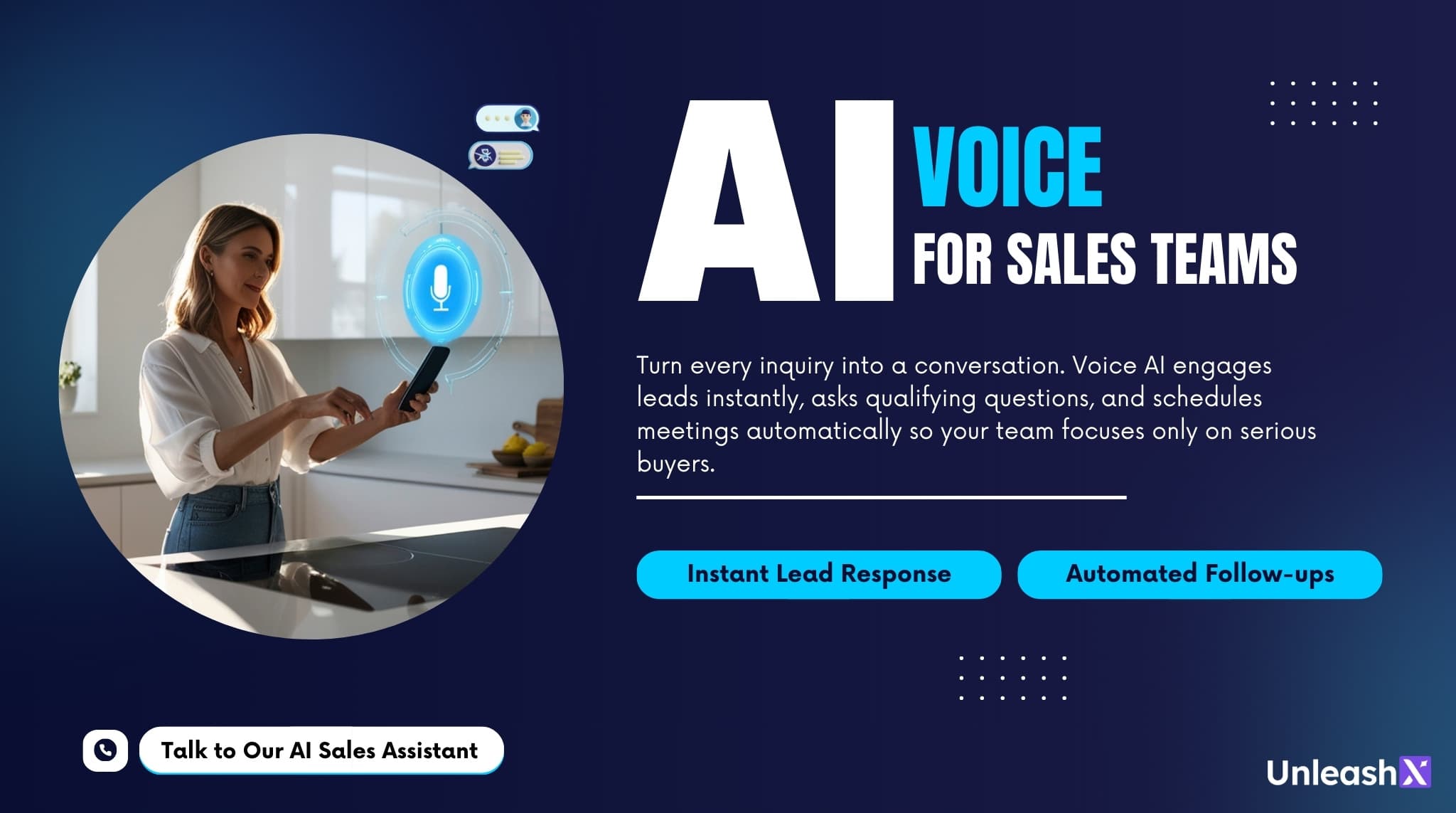
A voice ai agent for sales does exactly that. It speaks with prospects the moment interest appears, gathers intent, and routes the right opportunities to the right people.
The shift isn?t about automation hype. It?s about protecting revenue from delay.
What is Voice AI in Sales?
Voice AI in sales is software that conducts real-time phone conversations with prospects using natural language.
It doesn?t play prerecorded messages or force menu options. It listens, understands responses, and replies dynamically, similar to a trained assistant following a conversation framework.
A voice ai agent for sales typically handles the top-of-funnel communication tasks that consume large amounts of sales time:
? Calling new leads instantly
? Asking qualification questions
? Scheduling meetings automatically
? Confirming interest
? Following up later if needed
What makes this different from traditional call automation is adaptability. If a prospect says, ?I?m comparing vendors next quarter,? the system responds differently than if they say, ?I need a demo today.?
The AI doesn?t replace persuasion or negotiation. Instead, it performs the coordination layer of sales – the logistics of talking to many people quickly and consistently.
You can think of it as structured conversation at scale. Every prospect receives a timely response, but the sales team only spends time where decisions are actually made.
Why It Matters
In sales, speed is not a convenience metric. It?s a conversion metric.
Studies consistently show that the first company to respond has a dramatically higher chance of winning the deal. Yet most teams respond hours later, sometimes days later, simply due to workload.
A voice ai agent for sales removes this delay entirely. The prospect gets contacted immediately while intent is still active.
Lead qualification becomes more reliable as well. Human reps often adapt questions based on mood, time pressure, or assumptions. AI follows the same criteria every time. That consistency improves pipeline quality.
Follow-ups also improve. Humans forget. Systems do not.
The AI can:
? Remind prospects of meetings
? Reconnect with inactive leads
? Confirm readiness before demos
? Gather early buying signals
The result is not just efficiency. It changes how sales time is spent. Instead of manually reaching out to dozens of people, reps focus on conversations where interest already exists.
Less chasing. More closing.
Real-World Use Cases
Voice AI works best in the stages where communication is necessary but not strategic.
Instant Lead Response
When someone submits a contact form, a voice ai agent for sales calls immediately. It confirms details, asks qualification questions, and books a meeting. The prospect experiences responsiveness instead of waiting.
Demo Confirmation
Missed meetings waste selling hours. The system calls before scheduled demos, confirming attendance or rescheduling. This alone can improve show rates significantly.
Re-engaging Old Leads
Many ?cold leads? are simply forgotten timing. Instead of bulk email campaigns, the AI calls previous prospects to check if priorities have changed. A surprising number re-enter the pipeline.
Post-Demo Check-ins
After presentations, the AI gathers feedback and identifies buying intent. Reps then prioritize follow-up on engaged buyers instead of guessing.
Across these scenarios, the AI handles coordination while humans handle persuasion. That division dramatically improves productivity.
Top Tools
Several platforms now support voice-based workflows for sales teams.
Fireflies.ai
Primarily a conversation intelligence platform. It records and analyzes calls, helping teams track commitments and follow-up tasks automatically.
Balto
Provides real-time call guidance. While reps talk, it suggests next steps and responses based on conversation context, improving consistency.
Chorus (ZoomInfo)
Analyzes call data to identify what messaging leads to successful deals. Teams refine sales scripts using actual conversation outcomes.
Some platforms focus on coaching, others on automation, but all share a goal: improving conversation efficiency and effectiveness.
Getting Started
Adopting voice automation works best when approached as process improvement rather than a technology project.
Start with repetitive communication.
New lead response and meeting confirmation are ideal first steps because they require structure, not persuasion.
Define qualification criteria.
Decide what makes a lead worth human time. The AI should filter before booking meetings.
Connect calendars and CRM.
When meetings and notes sync automatically, adoption becomes effortless for the sales team.
Measure outcomes.
Track response time, meeting attendance, and conversion rates. Teams typically expand usage once the impact becomes visible.
The key is gradual integration. Begin with assistance, not replacement.
Conclusion
Sales success increasingly depends on speed and consistency rather than volume alone.
Companies that engage buyers immediately build stronger trust and capture more opportunities. Those that respond slowly compete after interest fades.
A voice ai agent for sales strengthens the earliest stage of the buyer journey – the moment curiosity appears. It ensures prospects receive attention instantly and sales teams receive only meaningful conversations.
As AI improves, the competitive advantage will not come from having more leads. It will come from reacting to them faster and better.
The future sales organization is not smaller.
It is sharper – humans handling decisions, systems handling coordination, and timing finally working in your favor instead of against you.