
Introduction
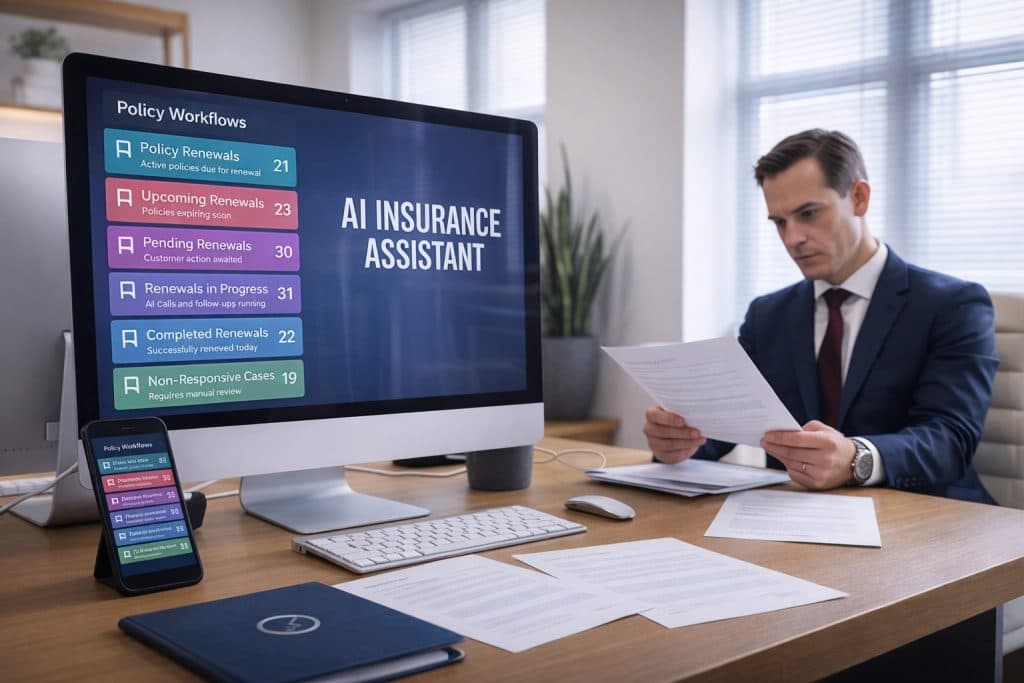
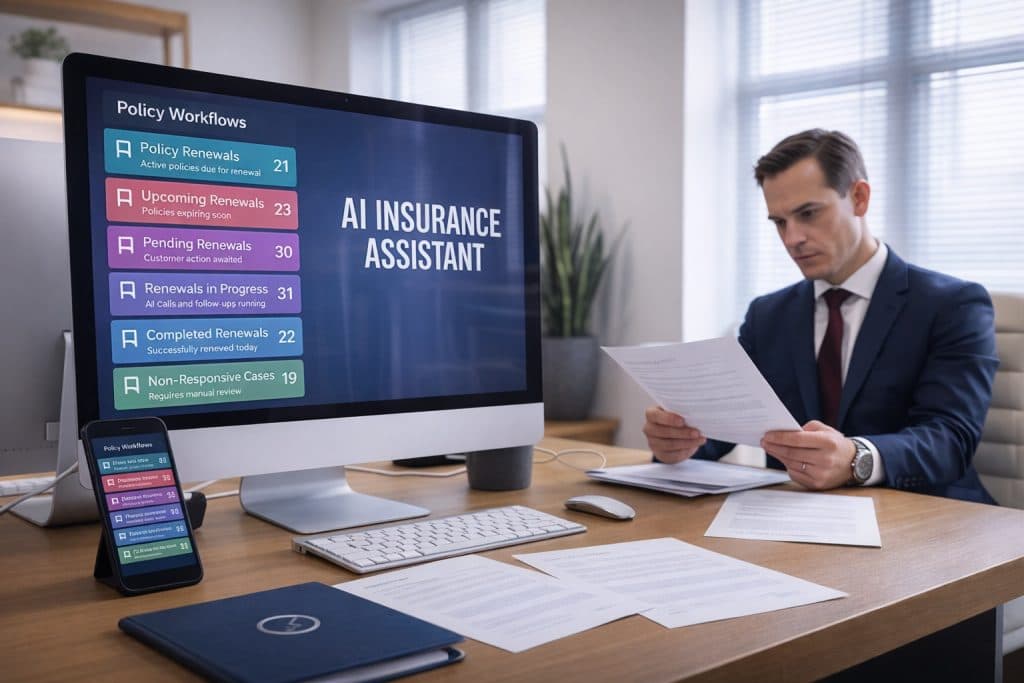
Insurance companies lose millions in revenue each year when policies expire without renewal, but AI insurance assistant technology can change this reality. Modern automated policy management systems now help insurers capture more renewals while reducing manual workload.
This guide targets insurance technology teams, IT leaders, and business analysts ready to implement AI insurance solutions within their organizations. The content covers practical steps for building effective policy renewal automation systems that actually work.
The following sections walk through the complete development process. First, learn how to identify specific requirements for automated renewal reminders and smart insurance notifications that match business needs. Next, discover proven methods for designing AI-powered insurance systems that integrate seamlessly with existing infrastructure. Finally, explore testing strategies and deployment approaches that ensure the insurance AI chatbot delivers consistent results at scale.
Building an effective insurance renewal software solution requires careful planning, but the payoff comes through improved customer retention insurance AI performance and streamlined automated insurance workflows that benefit both teams and policyholders.
Understanding AI Assistant Requirements for Insurance Renewals
Identifying Key Renewal Process Pain Points
Insurance companies frequently struggle with manual renewal processes that create bottlenecks and customer frustration. Common challenges include delayed renewal notices, missed policy expirations, and inconsistent communication across multiple channels. An AI insurance assistant addresses these pain points by providing automated renewal reminders and streamlined policy management workflows that reduce administrative overhead while improving customer satisfaction.
Defining Customer Communication Needs
Effective customer communication requires personalized messaging that adapts to individual policyholder preferences and behaviors. Modern insurance AI chatbots must handle multi-channel interactions, from email notifications to SMS alerts and web-based conversations. Smart insurance notifications should deliver timely, relevant information about policy changes, premium adjustments, and renewal deadlines while maintaining a consistent brand voice across all touchpoints.
Determining Data Integration Requirements
Successful AI-powered insurance systems depend on seamless integration with existing policy management databases, customer relationship management platforms, and third-party data sources. The architecture must support real-time data synchronization to ensure accurate policy information and customer records. Integration requirements include API connectivity, data mapping protocols, and secure data transfer mechanisms that comply with insurance industry regulations.
Establishing Performance Metrics and Goals
Performance measurement for automated insurance workflows focuses on key indicators such as renewal rate improvements, customer response times, and operational efficiency gains. Metrics should track the AI insurance solution?s impact on customer retention, processing accuracy, and cost reduction. Establishing baseline measurements before implementation enables organizations to quantify the assistant?s effectiveness and identify areas for continuous optimization.
Planning Your AI Assistant Architecture
Selecting the Right AI Framework and Tools
Building an effective AI insurance assistant requires choosing frameworks that excel at natural language processing and integration capabilities. Popular options include Microsoft Bot Framework for enterprise-grade insurance AI chatbots, Dialogflow for conversational interfaces, and Rasa for customizable automated renewal reminders. The selected framework should support multi-channel deployment, handle complex insurance terminology, and integrate seamlessly with existing policy renewal automation systems.
Designing Conversational Flow Templates
Well-structured conversation templates form the backbone of successful insurance AI solutions. These templates should map common renewal scenarios, including policy expiration alerts, premium updates, and coverage modifications. Each template must account for different customer personas and insurance product types while maintaining consistent messaging. Smart insurance notifications require branching logic that adapts based on customer responses and policy status.
Creating Data Pipeline Infrastructure
Robust data pipelines enable AI-powered insurance systems to access real-time policy information and customer data. The infrastructure should connect multiple data sources including policy management systems, customer databases, and external validation services. Automated insurance workflows depend on reliable data synchronization to trigger appropriate renewal actions and maintain accurate customer records across all touchpoints.
Building Core AI Functionality
Training Natural Language Processing Models
Effective AI insurance assistants rely on sophisticated natural language processing models that understand insurance terminology and customer communication patterns. Training these models requires comprehensive datasets containing policy documents, customer inquiries, and renewal-related conversations. The models must recognize intent behind customer messages, extract relevant policy information, and generate appropriate responses for various renewal scenarios.
Implementing Policy Data Extraction Capabilities
Policy data extraction capabilities form the backbone of automated insurance workflows, enabling AI assistants to process complex policy documents and identify key renewal information. Advanced optical character recognition combined with machine learning algorithms can extract policy numbers, coverage details, expiration dates, and premium amounts from various document formats. These extraction systems must handle multiple insurance carriers? document structures while maintaining high accuracy rates.
Developing Renewal Timeline Automation
Renewal timeline automation streamlines the entire policy renewal process by creating intelligent scheduling systems that trigger actions based on specific dates and customer preferences. Smart insurance notifications can be programmed to send alerts at predetermined intervals before policy expiration, while accounting for different communication preferences and policy types. This automation ensures no customer falls through the cracks during the renewal process.
Creating Personalized Communication Templates
Personalized communication templates leverage customer data and policy history to generate tailored renewal messages that resonate with individual policyholders. AI-powered insurance systems analyze past interactions, claim history, and customer demographics to customize messaging tone, content, and timing. These templates adapt to different customer segments while maintaining compliance with insurance regulations and company branding standards.
Integrating Risk Assessment Algorithms
Risk assessment algorithms enhance customer retention insurance AI by evaluating policyholder profiles and predicting renewal likelihood based on multiple factors including payment history, claims frequency, and market conditions. These algorithms help insurance companies proactively address potential customer churn by identifying at-risk policies and triggering personalized retention strategies. The integration allows for dynamic pricing adjustments and targeted offers that improve renewal rates while maintaining profitability.
Connecting Insurance Systems and Data Sources
Establishing CRM Integration Points
The foundation of any successful AI insurance assistant lies in seamless CRM integration. Modern insurance CRMs store customer contact information, communication history, and policy details that AI systems need to deliver personalized renewal experiences. API connections enable the AI assistant to access customer profiles, track interaction patterns, and identify optimal outreach timing for policy renewals.
Connecting Policy Management Systems
Policy management platforms contain the core data that drives automated renewal reminders and smart insurance notifications. Integration with these systems allows AI-powered insurance systems to monitor policy status changes, extract expiration dates, and trigger renewal workflows automatically. Real-time access to policy data ensures the AI insurance chatbot provides accurate information during customer interactions.
Implementing Real-time Data Synchronization
Data synchronization between multiple insurance systems creates a unified view for the AI assistant. This synchronization enables automated policy management by ensuring customer information, policy details, and renewal status remain consistent across all platforms. Regular data updates prevent outdated information from affecting renewal processes and customer communications.
Testing and Optimizing Assistant Performance
Conducting User Acceptance Testing Scenarios
Real-world testing scenarios reveal how effectively an AI insurance assistant handles diverse renewal situations. Testing should encompass various customer personas, from tech-savvy millennials to seniors requiring additional guidance. Creating scenarios that simulate complex policy changes, multi-policy renewals, and edge cases ensures the assistant performs reliably across different customer interactions.
Measuring Response Accuracy and Speed
Performance metrics for insurance AI chatbots require precise tracking of response accuracy rates and processing speeds. Automated policy management systems must maintain response times under three seconds while achieving accuracy rates exceeding 95% for policy renewal automation tasks. Regular benchmarking against industry standards helps identify performance gaps and optimization opportunities.
Refining Conversation Flows Based on Feedback
Customer feedback analysis drives continuous improvement of smart insurance notifications and conversation pathways. Mapping user drop-off points and analyzing failed interactions provides insights into conversation flow weaknesses. Iterative refinement based on actual usage patterns enhances the AI insurance solutions effectiveness and reduces customer frustration.
Implementing Continuous Learning Mechanisms
Machine learning algorithms enable AI-powered insurance systems to adapt and improve through ongoing customer interactions. Implementing feedback loops allows the system to learn from successful renewal completions and failed attempts. This continuous learning approach ensures automated insurance workflows become more sophisticated over time, improving customer retention insurance AI performance and reducing manual intervention requirements.
Deploying and Scaling Your Insurance AI Assistant
Choosing Deployment Infrastructure Options
Cloud-based infrastructure provides the most scalable foundation for AI insurance assistants, with platforms like AWS, Azure, and Google Cloud offering specialized machine learning services. Organizations can leverage containerized deployments using Docker and Kubernetes to ensure consistent performance across environments. Hybrid deployment models allow sensitive policy data to remain on-premises while processing automated renewal reminders through secure cloud connections.
Training Staff on AI Assistant Management
Insurance teams require comprehensive training on AI assistant oversight, including monitoring automated policy management workflows and troubleshooting notification failures. Staff should understand how to adjust AI-powered insurance systems parameters, interpret performance dashboards, and handle escalated customer inquiries. Regular training sessions ensure teams can effectively manage policy expiration alerts and maintain optimal system performance.
Monitoring Customer Satisfaction Metrics
Key performance indicators for insurance AI chatbots include response accuracy rates, renewal completion percentages, and customer feedback scores. Real-time monitoring dashboards track metrics like notification delivery success, customer engagement rates with automated insurance workflows, and overall satisfaction with the AI insurance solutions experience. Regular analysis of these metrics enables continuous optimization of customer retention insurance AI strategies.
? AI Insurance Renewal Assistant Overview
| Area | What It Covers | Business Outcome |
|---|---|---|
| Requirements & Planning | Renewal pain points, communication needs, data integration, KPIs | Clear scope and measurable ROI |
| Architecture & Design | AI frameworks, conversation flows, data pipelines | Scalable and compliant system design |
| Core AI Capabilities | NLP, data extraction, automation, personalization, risk assessment | Higher renewal rates and lower manual effort |
| System Integrations | CRM, policy systems, real-time synchronization | Accurate, real-time customer interactions |
| Testing & Optimization | UAT, performance metrics, continuous learning | Reliable and improving AI performance |
| Deployment & Scaling | Cloud infrastructure, staff training, monitoring | Long-term scalability and operational efficiency |
Key Takeaways
- Improves renewal conversion rates through automated, personalized, and timely policy renewal communication.
- Reduces operational workload by automating policy tracking, reminders, and customer follow-ups at scale.
Conclusion
Building an AI assistant for insurance renewals requires careful planning and execution across multiple technical areas. The process starts with understanding specific requirements, designing a robust architecture, and developing core AI capabilities that can handle complex insurance workflows. Successfully integrating with existing insurance systems and data sources creates the foundation for an assistant that can access policy information, customer data, and renewal requirements in real-time.
The path from development to deployment involves rigorous testing and performance optimization to ensure accuracy and reliability. Once deployed, scaling the assistant effectively allows insurance companies to handle increasing renewal volumes while maintaining consistent service quality. Organizations that invest time in proper testing, system integration, and performance monitoring will see the greatest return on their AI assistant implementation, leading to improved customer satisfaction and streamlined renewal processes.